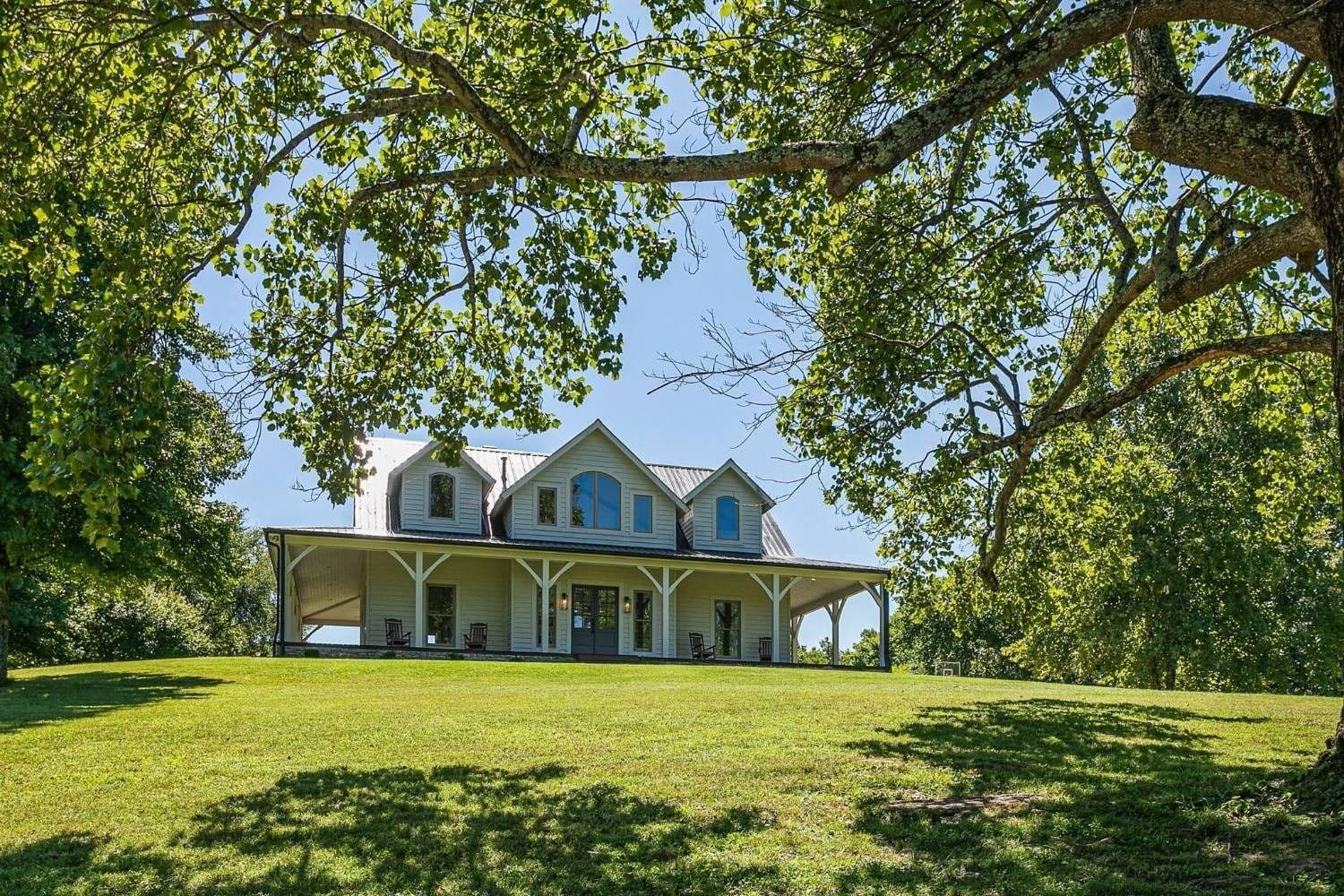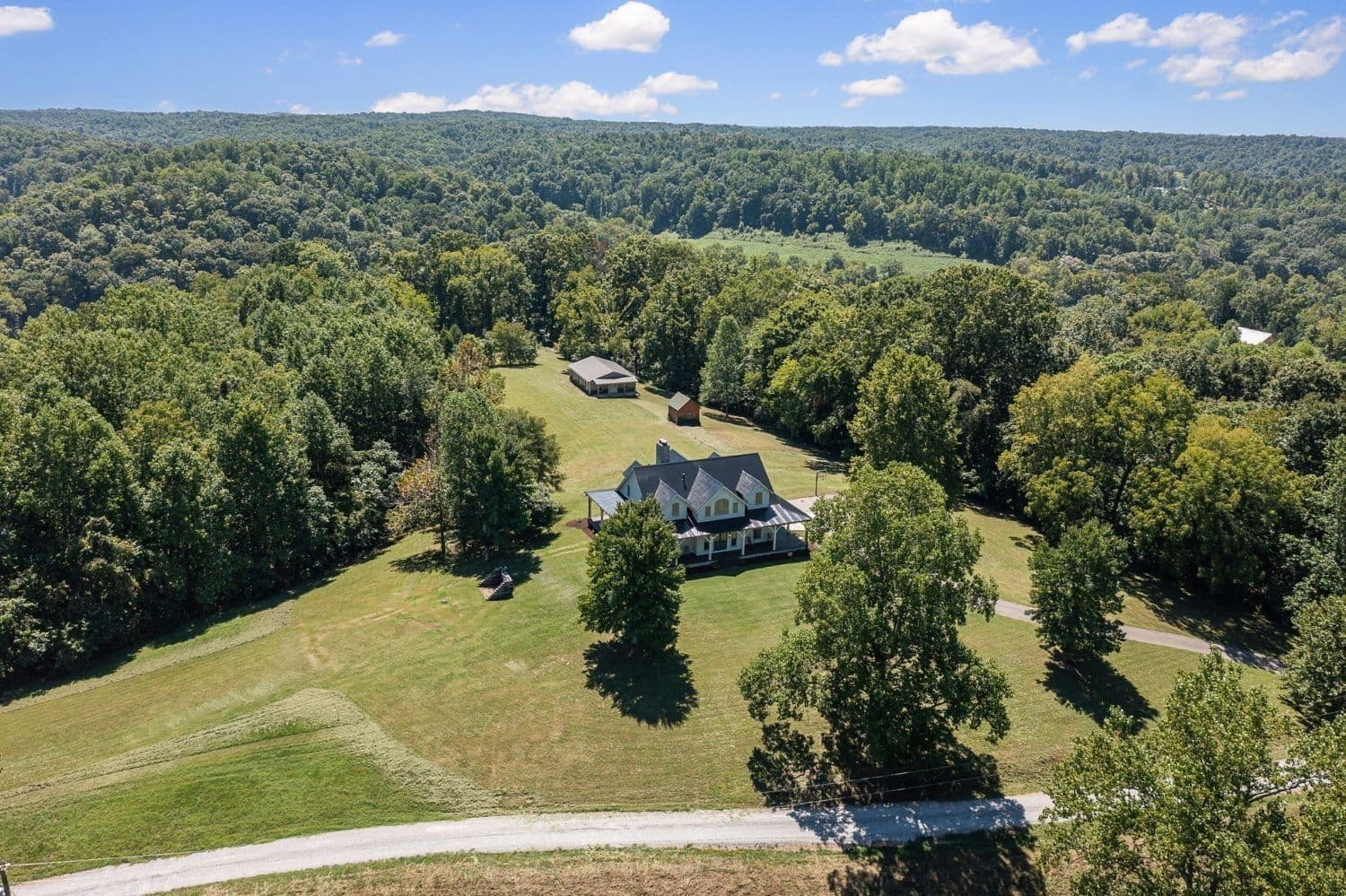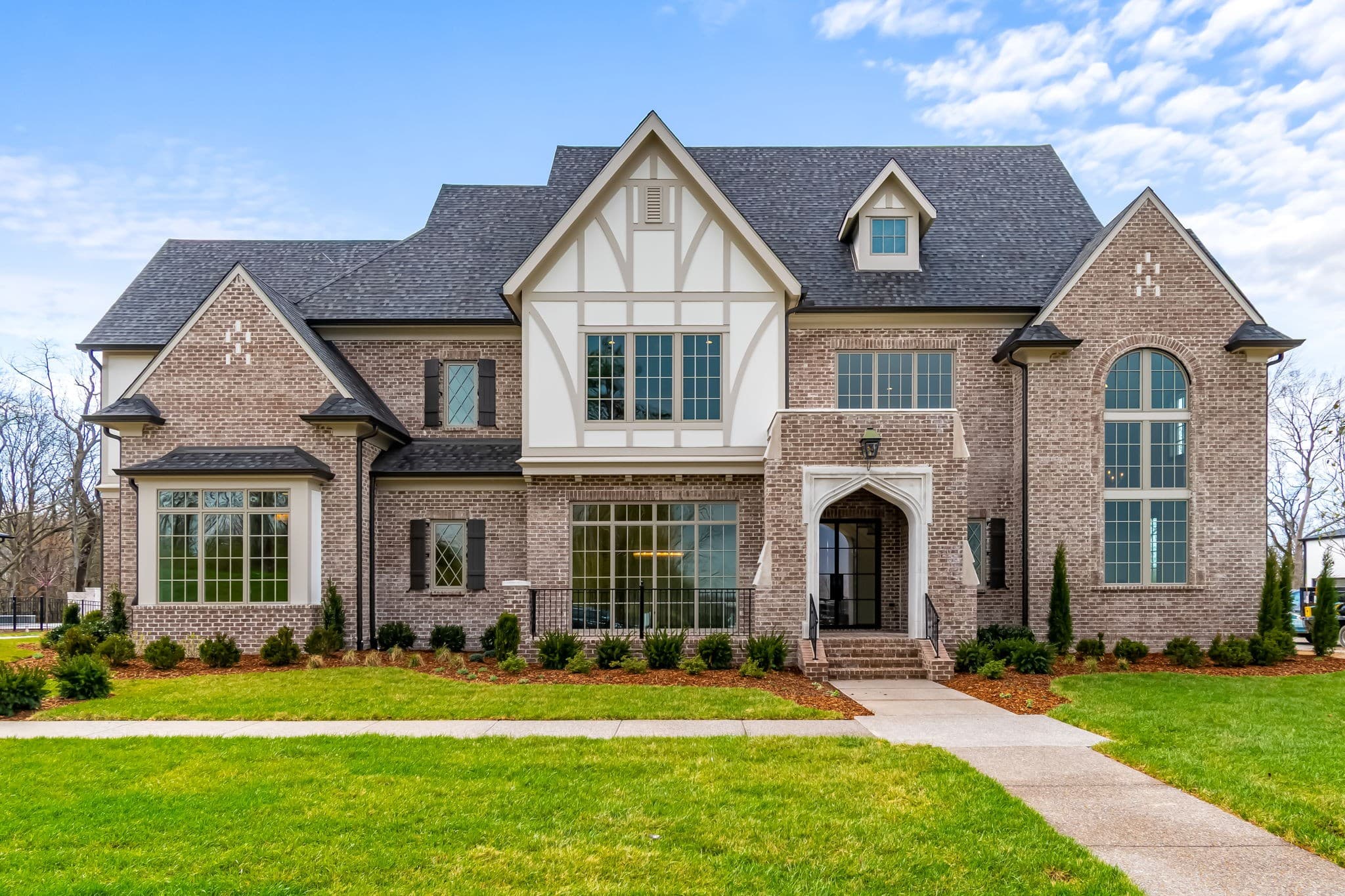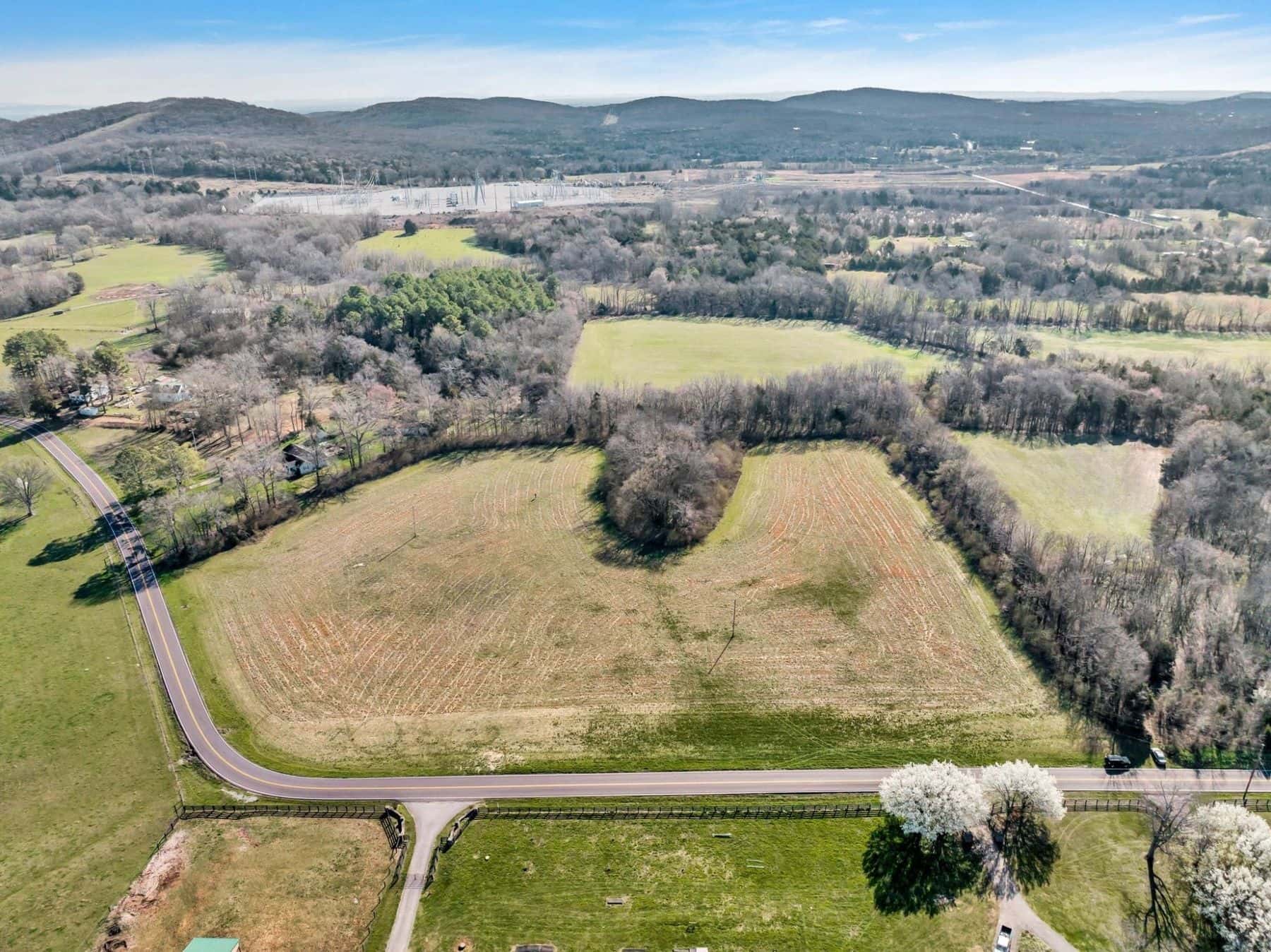
College Grove: From Farmland to Estate Corridor
College Grove is an unincorporated community in southern Williamson County, Tennessee, roughly 12 miles southeast of downtown Franklin, that has transformed over the past 15 years from working farmland into the county's premier estate and golf-community corridor, while still holding more buildable acreage than anywhere else in the county.
The transformation is easy to date. Before Interstate 840 opened its southern arc, College Grove was a crossroads village: a post office, a couple of churches, cattle and hay operations on both sides of Highway 31A. The interstate changed the math: suddenly this quiet stretch of the Harpeth River headwaters sat 20-something minutes from Cool Springs and a straight shot from the airport, with land prices that looked like a rounding error next to Brentwood. Developers noticed. First came The Grove, the county's only Greg Norman Signature golf community. Then Discovery Land Company arrived with Troubadour Golf & Field Club, and a wave of production and semi-custom communities followed along the 840 corridor.
What makes College Grove unusual in 2026 is that both markets still exist side by side. You can buy a $5 million new build behind a gate with a golf membership attached, or you can buy 40 acres of pasture two miles away and build exactly what you want. Almost nowhere else in Williamson County still offers that second option at scale. As of early 2026, roughly 196 land listings were active in and around College Grove, by far the deepest land inventory in the county.
One important framing before we go deeper: College Grove is not a town. It has no mayor, no city taxes, no municipal services. It is governed and serviced by Williamson County, which shapes everything from your water source to your fire protection to what your neighbor can build next door. We cover the practical implications below.
Inside The Grove: Williamson County's Gated Golf Community
The Grove is a private, gated golf community in College Grove built around Middle Tennessee's only Greg Norman Signature golf course, with homes typically trading between roughly $1.7 million and $6 million-plus and a mandatory club membership ($50,000–$100,000 initiation) attached to every purchase.
The course. The 18-hole Greg Norman Signature course stretches to 7,368 yards and works the property's natural limestone outcroppings and waterways, with eight bridges crossing on-site creeks. It is the anchor amenity, but The Grove sells itself as a family resort as much as a golf club: pool complex, tennis, fitness, dining, and a full calendar of member events. Amenity lineups evolve as the club invests, so confirm the current offerings with The Grove directly.
What homes cost. Recent market data puts The Grove's median sale price at approximately $3.18 million, with an average around $3.55 million. The bulk of transactions, 21 of the last 50 closings, landed in the $2M–$3M tier, and the community's ceiling reset in April 2026 with a $7,999,900 closing on Solstice Drive. As of June 2026, 34 active listings averaged roughly $3.41 million.
Lots and builders. Buyers who want to build can still purchase homesites, generally 0.25 to 0.85 acres, priced from roughly $445,000 to $1.2 million depending on position. Golf-course frontage commands the premium. Construction runs through an approved-builder roster that includes Trace Construction, Ford Classic Homes, Legend Homes, Stonegate Homes, Davis Properties, and Hatcliff Construction.
The membership math. This is the number that surprises people. Every homeowner is required to carry at least a Sports membership. Current published figures: Sports membership is a $50,000 initiation due at closing plus roughly $312/month; Golf membership is $100,000 plus roughly $907/month. On top of that, HOA dues on recent closings ranged from $237 to $376/month (averaging about $264), covering gated security and common-area maintenance. So a $3M purchase realistically carries $50K–$100K at closing plus $550–$1,300/month in combined club and HOA obligations before you touch property taxes. Confirm current membership pricing with The Grove's membership office before writing an offer. Clubs adjust initiation fees and dues without much public notice.
First-timers through the gate at The Grove usually expect a golf course with houses on it; what they find is closer to a resort with a course attached, and the scale of it resets expectations fast. The other recalibration happens at the kitchen table, when we walk through the membership and HOA math line by line. I'd rather a buyer feel that full number before we write an offer than discover it at closing.
Beyond The Grove: Farms, Acreage, and Custom Estates
Outside the gates, College Grove is Williamson County's last true land market: as of early 2026, nearly 200 land listings were active in the area, with raw land averaging roughly $207,000 per acre and houses-with-land averaging about $163,000 per acre. Those numbers vary enormously with parcel size, road frontage, and topography.
Read those per-acre averages carefully. They're skewed by small parcels near the 840 interchanges; a 3-acre estate lot near Arrington trades at a very different per-acre rate than 60 acres of pasture south of the village. As a working rule, the smaller and closer to Franklin the parcel, the higher the per-acre number. Large back-of-the-valley tracts still trade well below the headline average. If you're evaluating a specific parcel, comparable sales matter far more than county-wide averages, and this is a market where MLS data alone routinely misses off-market farm transactions.
The custom-build path here typically looks like this: buy the land (often with a farm or older home on it), confirm soils for septic, engage a builder for a 12–24 month build, and finance it either with a construction-to-perm loan or cash. Williamson County's five-acre minimum in many rural zoning districts shapes what can be subdivided, and the College Grove Special Area Plan (more below) deliberately limits dense development, which is exactly why estate buyers like it. Verify the zoning district and minimum lot size for any specific parcel with Williamson County Planning before writing an offer.
Who's buying land here: buyers priced out of Leiper's Fork's scarcer inventory, equestrian owners, family compounds, and Brentwood sellers converting equity into acreage. The comparison that comes up constantly: the price of a half-acre in Brentwood versus 10–20 acres in College Grove.
That Brentwood-versus-acreage conversation happens in my car more often than almost any other in this corridor. Sellers sitting on Brentwood equity run the math, see what the same dollars buy in land out here, and then the real question surfaces: can their daily life absorb the drive? Some decide it can't, and that's a perfectly good answer, but the ones who make the move tend to know exactly what they traded and why.
The New Construction Pipeline
College Grove is currently one of the most active new-construction markets in Williamson County, with roughly 170 new-construction closings in the trailing 12 months ranging from about $961,000 to $13.75 million, driven by three engines: Reeds Vale, The Grove, and Troubadour Golf & Field Club.
Troubadour Golf & Field Club is the headline luxury project: a Discovery Land Company community of approximately 375 homes on 908 acres, built around a Tom Fazio-designed course and Discovery's signature outdoor-pursuits programming. Recent sales ran from $3.45 million to $13.75 million with a median of $5.85 million and roughly $1,000+ per square foot, the highest price points in the county outside a handful of Brentwood estates. Residential HOA runs $415–$715/month, with club membership (required to purchase) priced separately. Published membership figures are limited, so confirm current initiation and dues with the club directly.
Reeds Vale is the volume story: Signature Homes' resort-style community logged roughly 105 closings in the trailing 12 months, more than any other community in the 37046 zip, with homes from about $961K to $1.75 million, floor plans from 2,953 to 5,290 square feet, and HOA around $125/month. It's the attainable on-ramp to College Grove: no club initiation, resort amenities, and it's zoned to Arrington Elementary, Page Middle, and Page High.
Beyond those three, expect continued builder activity along the 840 interchanges and the Arrington–College Grove seam: this corridor and neighboring Arrington are where most of southern Williamson County's approved residential pipeline sits. What you should not expect is dense subdivision growth in the village core or the farm valleys south of it: the county's College Grove Special Area Plan and rural zoning intentionally hold those areas to low-density, open-space-preserving standards.
The Practical Realities: Utilities, Services, and Governance
College Grove is unincorporated, so Williamson County, not a city, handles its governance, planning, and most services; practically, that means county property taxes only (no city tax), septic systems on most estate parcels, utility-district water, and fire protection from county-affiliated stations rather than a municipal department.
Governance. There is no College Grove city government. Zoning, permits, and land use run through Williamson County Planning, guided by the College Grove Village Special Area Plan: a county-adopted framework (rooted in the 2007 Comprehensive Land Use Plan, with standards written into the county zoning ordinance) that protects the village's small-town character, requires open space in new projects, and steers away from dense retail corridors. For buyers, that plan is a feature: it's the regulatory reason College Grove is unlikely to turn into another Nolensville.
Water and sewer. Piped water in much of the area comes from the Nolensville/College Grove Utility District, an independent utility governed by a board of commissioners. There is no municipal sewer across most of College Grove: gated communities run on community systems, while estate and farm parcels are almost universally on individual septic, permitted through Williamson County's Sewage Disposal Management department. On raw land, always make the offer contingent on a soils/perc evaluation: soil quality, not price, determines whether that beautiful hillside can support the six-bedroom house you're planning.
Internet. This is better than buyers expect. United Communications has been aggressively building fiber through southern Williamson County, including a fiber-to-the-home project covering roughly 200 homes in the West College Grove area. Gated communities are fiber-served; on rural parcels, verify service to the specific address before closing.
Fire and EMS. Coverage comes through Williamson County's fire-rescue network, with two stations in College Grove itself: Station 15 on Giles Hill Road and Station 18 on Depot Street. Rural station response (and your distance from a hydrant) affects homeowners-insurance ratings on some estate parcels, worth pricing during due diligence rather than after.
Schools. College Grove is served by Williamson County Schools, consistently among Tennessee's top districts, with College Grove Elementary in the village itself and most of the area feeding the Page Middle / Page High cluster; exact zoning varies by address and communities like Reeds Vale zone to Arrington Elementary. Confirm any specific address on the current WCS zoning maps, and see our full Williamson County Schools guide for how the district's clusters compare.
Getting There: I-840 and Commute Math
Thanks to I-840, College Grove's real-world drive times are roughly 20–25 minutes to Cool Springs, 30–40 minutes to downtown Franklin, 50–65 minutes to downtown Nashville in normal conditions, and about 25–45 minutes to Nashville International Airport depending on route and time of day.
The honest version of the commute math:
- Cool Springs (I-840 W to I-65 N): about 20–25 minutes off-peak. This is the route that made College Grove viable: what used to be a winding 45-minute backroad drive became a direct interstate run.
- Downtown Franklin: 30–40 minutes, whether you take 840 or Arno Road through Arrington.
- Downtown Nashville: published "35 minutes" figures assume empty roads; plan on 50–65 minutes in normal conditions and more at peak. If a daily downtown commute is non-negotiable, College Grove is a stretch.
- BNA (Nashville International): the 840-east routing is the sleeper advantage: sources quote 25 to 45 minutes depending on conditions; frequent flyers based here routinely beat Brentwood residents to the terminal. Check live drive times at your actual departure hour. The range is wide because it genuinely varies.
The pattern: College Grove trades downtown proximity for interstate-grid access. If your life runs through Cool Springs, Franklin, Murfreesboro, or the airport, the location works better than the map suggests. If it runs through midtown Nashville daily, it doesn't.
Who College Grove Fits
College Grove fits buyers who want land, privacy, or resort-gated luxury at price-per-acre and price-per-square-foot numbers Brentwood and Franklin can no longer offer, and who will trade a longer Nashville commute to get it.
It's the right answer for: golf-and-club families (The Grove, Troubadour), equestrian and hobby-farm buyers, custom-build clients who want real acreage under a top school district, relocating executives flying out of BNA weekly, and Brentwood equity sellers scaling up in land while scaling down in price per acre. It's the wrong answer for anyone who needs walkability, city services, or a sub-30-minute downtown Nashville commute.
Two useful comparisons as you shop southern Williamson County. If your heart is set on land with a historic-village, gallery-and-music culture attached, and you'll pay a scarcity premium for it, look at Leiper's Fork, the county's other estate-and-land market, on the west side. If you want new-construction luxury with slightly closer Franklin access and less acreage, the adjacent Arrington corridor (home of Hardeman Springs and the King's Chapel area) is College Grove's natural sibling. Many of our buyers tour all three before the trade-offs click.
Walking a land buyer through southern Williamson County, I start with the least glamorous step: the soils. What the ground will support determines the house, not the other way around, and buyers who accept that early save themselves months of redesign later. My other standing advice is to pad the builder's timeline in your own planning: septic design, site work, and county sign-offs out here move on their schedule, not yours.
If you're weighing a College Grove purchase, or trying to price acreage you already own here where comps are genuinely hard, the Ryan Boggs Group has spent 11+ years and 260+ closings working Williamson County's luxury and land markets. Start with a free home or land valuation, or reach out directly to talk through The Grove, Troubadour, or an acreage search before you commit to a gate or a tractor.