Why Fieldstone Farms Endures
Fieldstone Farms is Franklin's largest neighborhood: 2,137 homes on more than 800 acres along the Hillsboro Road corridor on the city's northwest side. After 35 years it remains one of the most consistently in-demand addresses in Williamson County. The reason is simple: it offers things new construction cannot manufacture at any price, including mature tree canopy, finished infrastructure, a proven school zone, and a community identity built over three decades.
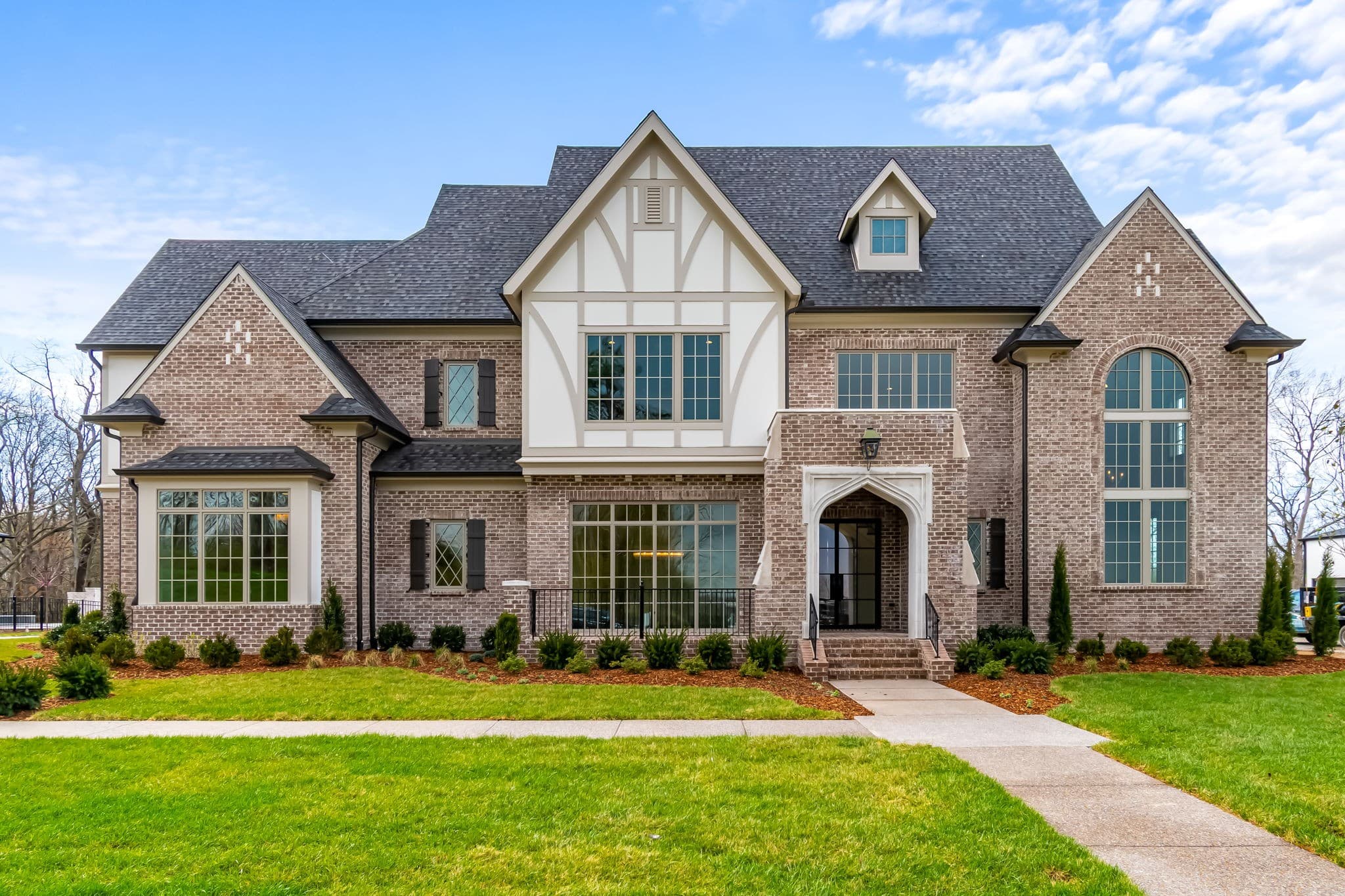
The land was a working farm, Cecilwood Farm, owned by the Sims family for over sixty years, before the Harlon Company began developing it in 1989 as one of Franklin's first planned unit developments. Build-out ran from 1989 to 2004 across dozens of sections, and the developers famously kept the white farm fences that lined the original fields. That 15-year build-out is why the community feels varied rather than stamped: early-1990s traditionals sit near early-2000s designs, small cottages share the neighborhood with gated executive homes, and no two streets read exactly alike.
What "established" means in practice, 35 years in:
- The trees are done growing. Streets are lined with mature hardwoods, not builder-grade saplings on graded dirt.
- The infrastructure is settled. No construction traffic, no phases left to build, no vacant pads next door. The community is finished.
- The community has institutions. The twice-yearly neighborhood garage sales (first Saturday of May and October) are a Middle Tennessee tradition, and the Fieldstone Flippers swim team has its own multi-generational history.
- The school zone is proven. Recent sales feed Hunters Bend Elementary, Grassland Middle, and Franklin High School, with Franklin High serving 100% of the community's closed sales over a recent 12-month period. Verify any specific address with Williamson County Schools, since zones can change.
Demand backs this up: 77 closed sales in the rolling 12 months through May 2026, a 10-day median days on market, and 43% of homes under contract in 6 days or fewer. Buyers are not settling for an older neighborhood here. They are choosing one.
There's a noticeable shift when a buyer who has spent weeks touring new construction turns onto one of these streets. The trees close in overhead, the white farm fencing rolls past, and the conversation in the car changes: they stop comparing floor plans and start picturing living here. Thirty-five years of growth is the one feature no builder can put on an options sheet, and it lands harder in person than any photo suggests.
Price Ranges: The Established-Community Value Case
Fieldstone Farms' median sale price of $682,000 (rolling 12 months through May 2026) sits dramatically below Franklin's citywide median of roughly $925,000. That gap is the core of the value case: a Franklin address, Williamson County schools, and full community amenities at a price newer Franklin communities simply don't offer.
The numbers, from RealTracs MLS data for the rolling 12 months through May 2026:
| Metric | Fieldstone Farms |
|---|---|
| Closed sales (12 mo.) | 77 |
| Sale price range | $385,000 – $1,750,000 |
| Median sale price | $682,000 |
| Average sale price | $716,787 |
| Median price per sq ft | $322 |
| Median days on market | 10 |
Two things stand out in that table. First, the sheer width of the range: $385K townhome-adjacent product to a $1.75M gated estate in the same HOA is nearly unheard of in Franklin. The community's named sub-sections drive that spread: Prescott Place townhomes ($485,000 recent median), Windsor Park 55+ homes (~$539,000 median), the mainstream single-family core ($500K–$900K), The Parks at Fieldstone Farms executive section, and the gated Reserve at Spencer Creek, where a recent two-sale median was $1,652,500.
Second, the price-per-square-foot figure. At a $322 median PPSF, Fieldstone Farms typically delivers finished, landscaped, amenity-served square footage for less than comparable new construction in Franklin, and the sale price includes the mature lot, the fencing, the window treatments, and the landscaping that a new-construction buyer spends tens of thousands adding after closing. Pull current new-construction comps to see exactly how wide that gap is at any given moment.
One honest caveat: this isn't a sleepy discount play. The $900K+ tier, the Reserve and larger executive homes, posted the fastest median days on market of any tier (6 days) over that window, faster than the sub-$500K entry tier (16 days). Prepared buyers move quickly here at every price point.
If you own in Fieldstone Farms and want a data-grounded read on what your specific section is doing, because a Reserve comp is useless for pricing a Trent Park cottage, start with a professional home valuation.
The Housing Stock: 1990s Homes, Renovations, and What to Look For
The homes in Fieldstone Farms were built between 1989 and 2004, which means you're buying a 22-to-37-year-old house. The single biggest variable in what you'll pay, and what you should inspect, is how much of that house has been updated since.
The styles. Expect traditional Southern architecture: brick and siding exteriors, attached two-car garages, formal dining rooms, and, in the 1990s phases, the era's vaulted ceilings, fireplace-anchored living rooms, and eat-in kitchens. Recent sales ranged from roughly 1,100 to nearly 6,000 square feet, with a median around 2,080. Common configurations: one-level cottages on cul-de-sacs, three-bedroom homes with bonus rooms over the garage, main-level primary suites in the later executive sections, and the occasional finished basement, rare enough here to command a premium.
The renovation spectrum. In practice, listings fall into three buckets:
- Fully renovated: new kitchen, baths, flooring, windows, roof, and systems. These sell fastest and at the top of their section's range; recent renovated listings openly itemize $30,000 window packages and new roofs in their marketing.
- Partially updated: typically kitchen and primary bath done, original elsewhere. The most common bucket, and where pricing gets negotiable.
- Largely original: well-maintained but 1990s throughout. These are the value entries and the renovation opportunities, and in this neighborhood the after-renovation comps clearly support the investment.
Watch two similar homes in the same section trade a few months apart, one renovated, one largely original, and the pattern repeats: the renovated home closes faster and at a meaningfully higher number, and the gap is usually wider than what the renovation itself cost. I won't put a figure on that delta without pulling the actual comps for your section, because it varies. But it's the reason I tell buyers of original-condition homes here that they're not just buying a discount: they're buying the spread, if they're willing to do the work.
Inspection priorities for a 25-to-35-year-old home. None of these are reasons to avoid Fieldstone Farms; they're reasons to inspect carefully and budget realistically:
- Roof and windows. Original windows are past their expected life; many homes have already been re-roofed and re-windowed (listings advertise it prominently). Confirm dates and permits.
- HVAC and water heater. A home on its second or third HVAC system is normal; verify age and service history.
- Polybutylene supply lines. Some homes built in the late 1980s through mid-1990s nationally used polybutylene plumbing, which insurers dislike. Have your inspector confirm what's in the walls on any home you're considering: this is a house-by-house question, not a neighborhood-wide one.
- Electrical panel and GFCI coverage. Code has moved since 1992; most homes have been updated, but confirm.
- Grading, gutters, and crawlspace moisture. Mature landscaping is beautiful, and 30 years of it can also change drainage patterns around a foundation.
- HOA architectural approval history. Exterior changes require Architectural Committee approval, so verify that additions, fences, and major exterior work were approved.
Amenities and the HOA
Every home in Fieldstone Farms belongs to the HOA, and dues for most sections run roughly $60–$120 per month (averaging about $119/month across recent closed sales), which buys access to one of the most complete amenity packages of any established Franklin neighborhood.
The amenity core is the Fieldstone Farms Swim and Tennis Club at 1530 Lexington Parkway, and the full package includes:
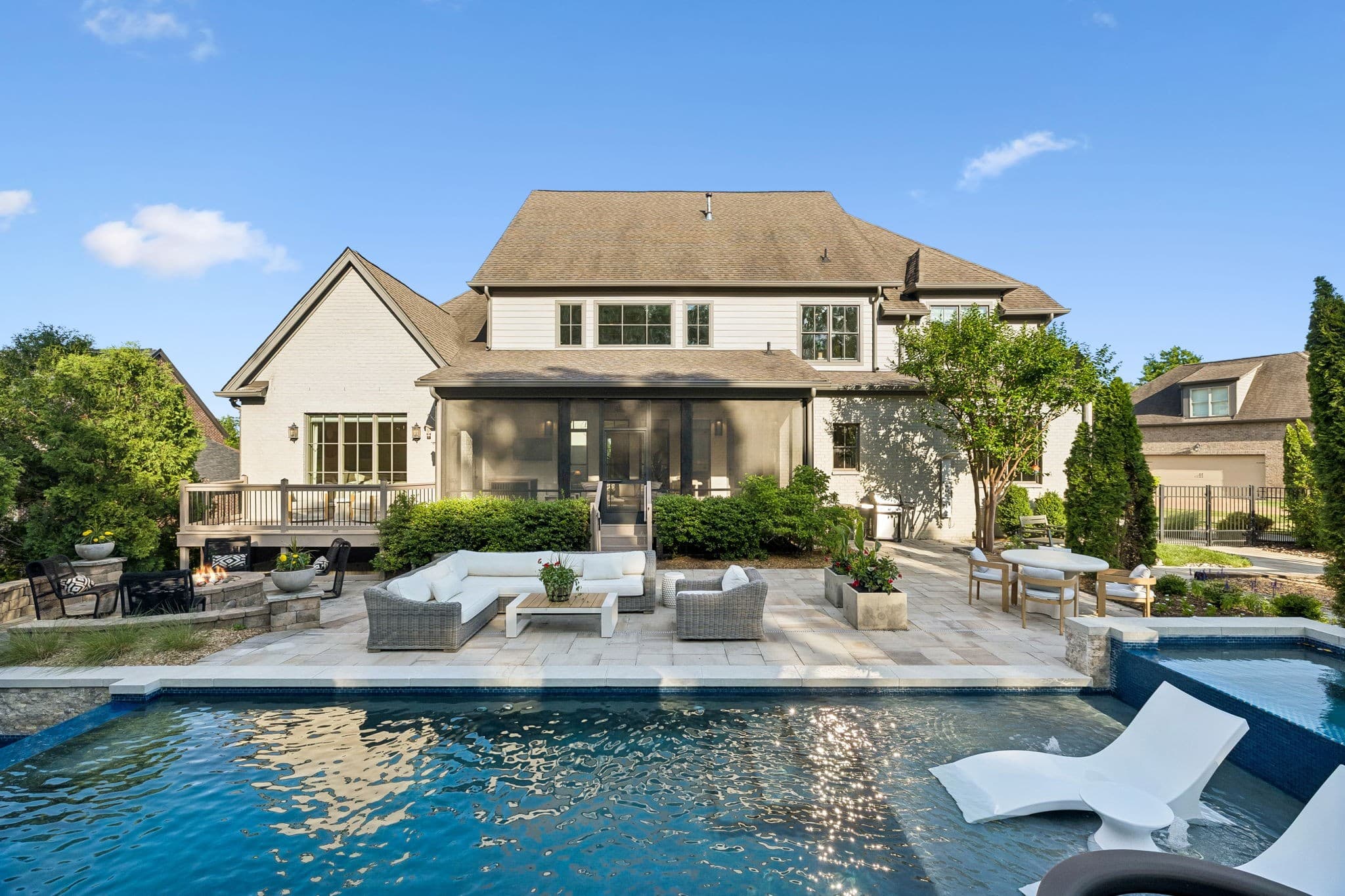
- Two swimming pools
- Clubhouse with fitness center (reservable for private events)
- Tennis courts and pickleball courts
- Playground and multiple parks
- Miles of internal walking trails connecting the sections
- The Fieldstone Flippers community swim team
HOA mechanics worth knowing before you write an offer: dues are paid either annually (due January 1) or monthly by ACH auto-draft, and those are the only two accepted methods. Exterior changes of any kind require Architectural Committee approval, while interior projects do not. Dues vary meaningfully by section: Windsor Park (the 55+ section) and Prescott Place townhomes carry higher, maintenance-included dues covering exterior maintenance and lawn care, with section fees observed up to roughly $360/month in recent sales data. The HOA publishes exact current dues through its management portal rather than publicly, so confirm the specific section's dues during due diligence.
The West Franklin Location
Fieldstone Farms sits on both sides of Hillsboro Road (TN-431) in Franklin's 37069 zip code, about 8–10 minutes from downtown Franklin's Main Street, 12–15 minutes from Cool Springs, and roughly 25–40 minutes from downtown Nashville depending on traffic.
The location logic works in three directions:
- South to downtown Franklin. Hillsboro Road runs straight into Five Points. A Franklin trolley stop at the front of the neighborhood even provides a car-free option to Main Street.
- East to Cool Springs and I-65. The 12–15 minute run to the Cool Springs corridor covers the office parks, CoolSprings Galleria retail, and interstate access.
- North to Nashville. At roughly 18 miles from downtown Nashville, Fieldstone Farms offers one of the shorter Nashville commutes among Williamson County neighborhoods: Hillsboro Road north through Green Hills, or east to I-65.
Daily errands are closer still: the Publix-anchored Harpeth Village shopping center sits at the Fieldstone Farms Parkway entrance with a pharmacy, restaurants, and services, genuinely walkable for many residents. Highway 96 West, the route toward Westhaven and the Natchez Trace, is a short drive south via downtown Franklin.
Green Space and Getting Outside
Fieldstone Farms was designed around green space: miles of internal walking trails link its sections without touching a main road, and it sits minutes from two of Franklin's signature parks.
Inside the neighborhood, the trail network, pocket parks, playground, and the preserved white farm fencing and open commons give the community its parklike character; the developers deliberately kept the natural lay of the old Sims farm rather than flattening it.
Just beyond the neighborhood:
- Jim Warren Park (705 Boyd Mill Avenue): a 58-acre active park with 12 baseball fields, 4 football fields, tennis courts, basketball courts, walking trails, a playground, and a skate park with a 16-foot skate bowl. It's Franklin's youth-sports hub, a short drive south of the neighborhood.
- The Park at Harlinsdale Farm (Franklin Road, north edge of downtown): a 200-acre former Tennessee Walking Horse farm turned passive park, home to walking trails, fishing, and events like the Pilgrimage Music Festival. A short drive via downtown Franklin.
The neighborhood also connects to Franklin's broader trail system, making nearby parks and schools reachable on foot or bike from many sections.
Fieldstone Farms vs McKay's Mill: Franklin's Two Big Master-Planned Communities
The short version: Fieldstone Farms (1989–2004, 2,137 homes, ~$682K median) is the older, larger, west-side community with a lower entry point and mature landscaping; McKay's Mill (2000–2014, 1,700+ homes, ~$785K median) is the newer east-side community with a walk-to-Cool-Springs location and a roughly $100K higher median.
| Fieldstone Farms | McKay's Mill | |
|---|---|---|
| Built | 1989–2004 | 2000–2014 |
| Homes / acreage | 2,137 homes / 800+ acres | 1,700+ homes / 540 acres |
| Median price (2026 data) | $682,000 | $785,000 |
| Recent price range | $385K – $1.75M | $388K – $1.425M |
| Typical HOA | ~$60–$120/mo (avg $119; higher in 55+/townhome sections) | $79–$440/mo (median $108) |
| Amenities | 2 pools, clubhouse/fitness, tennis, pickleball, trails | Olympic-size saltwater pool, 5,000 sq ft fitness center/clubhouse, tennis, 3 trail systems |
| Location | Hillsboro Rd, northwest Franklin (37069) | Off McEwen Dr, east Franklin (37067) |
| High school zone (recent sales) | Franklin High | Confirm current zoning with WCS |
An honest read on how buyers actually choose:
- Choose Fieldstone Farms if you want the lower entry point, the mature tree canopy and larger established feel, proximity to downtown Franklin and the Hillsboro Road/Green Hills route to Nashville, or the wider product range: from a $400K-range cottage to a gated $1.5M+ estate in the same community.
- Choose McKay's Mill if you want a newer home (2000s construction means newer systems and layouts by default), you work in Cool Springs and want to be minutes, or a walk, from it, or you value its Village Center and amenity campus.
- Where they're equal: both are large, amenity-rich, HOA-governed master-planned communities in Franklin with strong Williamson County schools and deep resale liquidity. Neither is a compromise; they're the west-side and east-side answers to the same question.
The real tradeoff is age-for-position: McKay's Mill's newer stock commands its premium, while Fieldstone Farms lets you buy the same square footage for less and direct the difference into renovations you choose, with 35 years of tree growth thrown in free.
When buyers weigh this community against new construction, the deciding question is almost always what the money buys on day one. A new build's sticker price doesn't include the fence, the blinds, the landscaping, or the years of waiting for shade. A Fieldstone Farms home hands you all of it at closing, with budget left over to renovate to your own taste instead of a builder's option sheet. For the buyers who choose here, that's typically what closes it: finished beats new, once they've priced out what "finished" actually costs.
I've walked buyers through both communities for over a decade, and the honest answer is that the right one depends on your commute, your renovation appetite, and which side of Franklin your life happens on. If you want to talk through it against what's actually on the market this month, reach out. Ryan Boggs Group at Benchmark Realty works these neighborhoods week in and week out.