Is Franklin, TN Right for You?
Franklin is the right fit if you want top-ranked public schools, a genuinely walkable historic downtown, and no state income tax. You'll also need to be prepared for home prices that now hover around $1 million at the median. It is one of the most complete small cities in the American South, and buyers pay accordingly.
Franklin sits about 20 miles south of downtown Nashville and is home to roughly 87,000 people. The people moving here fall into a few recognizable groups:
- Corporate relocations. Cool Springs, the office corridor along I-65 inside Franklin's city limits, anchors regional and national headquarters, and a steady stream of healthcare, finance, and tech transferees lands here every year.
- Families chasing schools. Williamson County Schools is rated the #1 district in the Nashville area and among the top districts in Tennessee by Niche, serving about 41,500 students.
- Move-up and luxury buyers leaving Nashville proper, California, the Northeast, and Florida for land, newer construction, and Tennessee's tax structure.
- Empty nesters and remote executives who want Main Street culture without big-city friction.
Who is Franklin not for? Buyers who need urban nightlife at their doorstep, and buyers whose budget tops out under roughly $500K. At that price point your realistic options are condos, townhomes, or older sections of a few established neighborhoods, and competition for them is real.
I've spent 11+ years and 260+ closings working this market, most of it in the $1M–$3M+ range across Williamson County, and the pattern I see is consistent: people come for the schools or the job, and they stay for the town itself.
The first walk down Main Street usually does my job for me. Relocation buyers arrive expecting a pleasant suburb with a nice strip of shops, because that's what "historic downtown" means most places they've lived. Then they see sixteen blocks of it actually working, on a Tuesday, full of locals. That gap between what they pictured and what they're standing in is the moment most of my out-of-state clients stop asking whether Franklin is worth the price and start asking which neighborhood.
The Franklin Housing Market at a Glance
Franklin's median sale price in mid-2026 is roughly $1.0–$1.15 million depending on the month measured, with homes averaging about 55 days on market, sellers getting around 96% of asking price, and roughly 3.7 months of supply. It's a market that has cooled from the frenzy years into something closer to balanced, but still expensive and still competitive for well-priced homes.
Here's what each budget tier actually buys in Franklin right now:
- Around $700K: A solid family home in an established planned community: think mid-2000s construction in McKay's Mill (community median around $785K, with sales recorded from the high $300s for condos/townhomes up to about $1.4M ) or Fieldstone Farms, where recent medians have ranged roughly from the mid-$500s to the high $600s depending on the measurement window. Expect 2,400–3,200 square feet, a two-car garage, and HOA amenities.
- Around $1M: The Franklin median. This buys a larger or newer home in the strongest school zones, an entry-level home in Westhaven (which starts in the upper $700s ), or a smaller updated home closer to downtown.
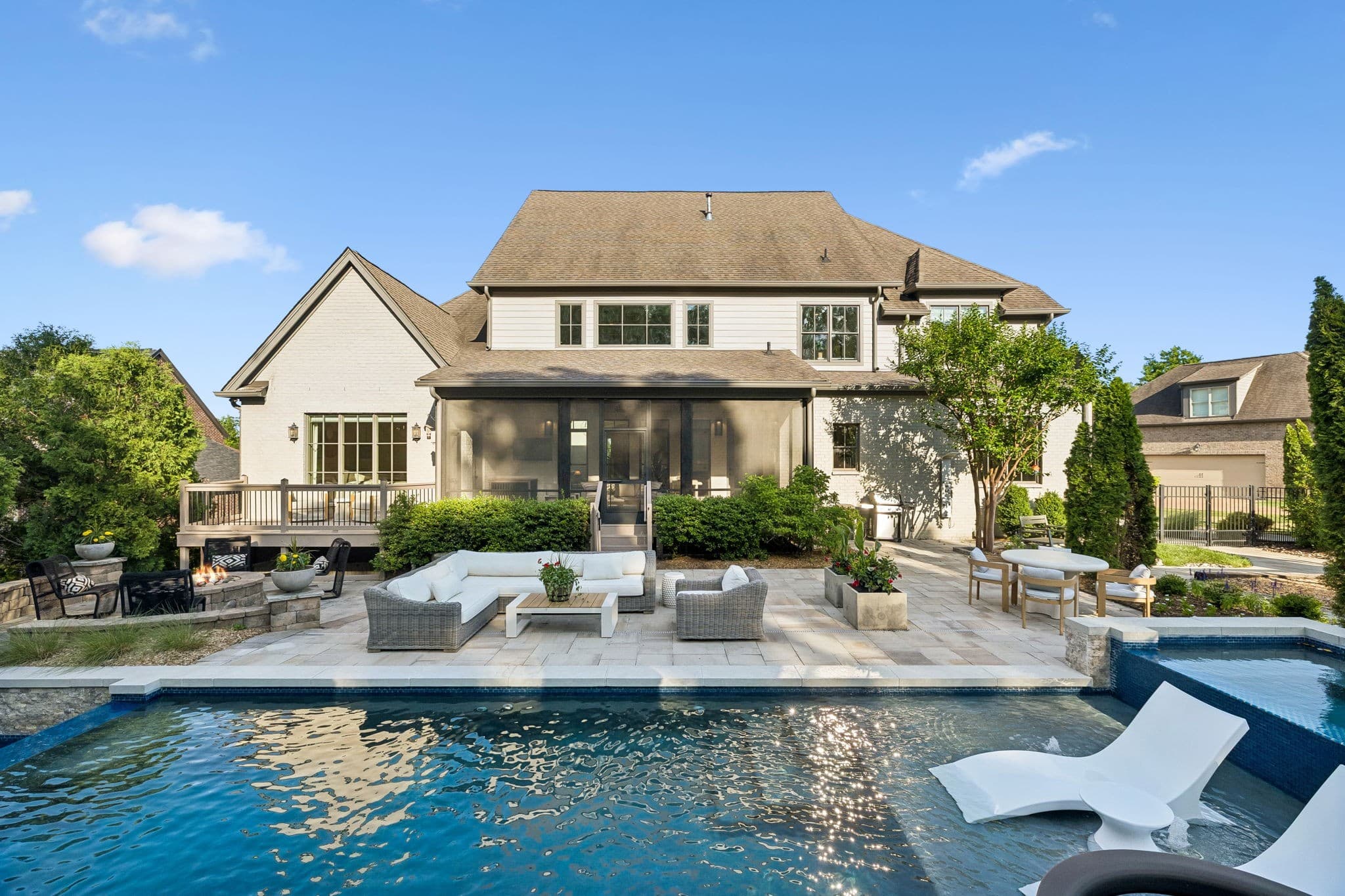
- Around $2M: Custom and semi-custom territory: larger Westhaven homes (community median roughly $1.33M, average sale prices recently in the $1.5M range ), historic homes walkable to Main Street, or newer builds on half-acre-plus lots in south and west Franklin.
- $3M and up: Estate territory. This is Leiper's Fork acreage (area median around $3.16M as of June 2026, with most estate sales between $1.5M and $8M ), premium Westhaven custom homes reaching past $5M, and gated or large-lot enclaves across west Franklin.
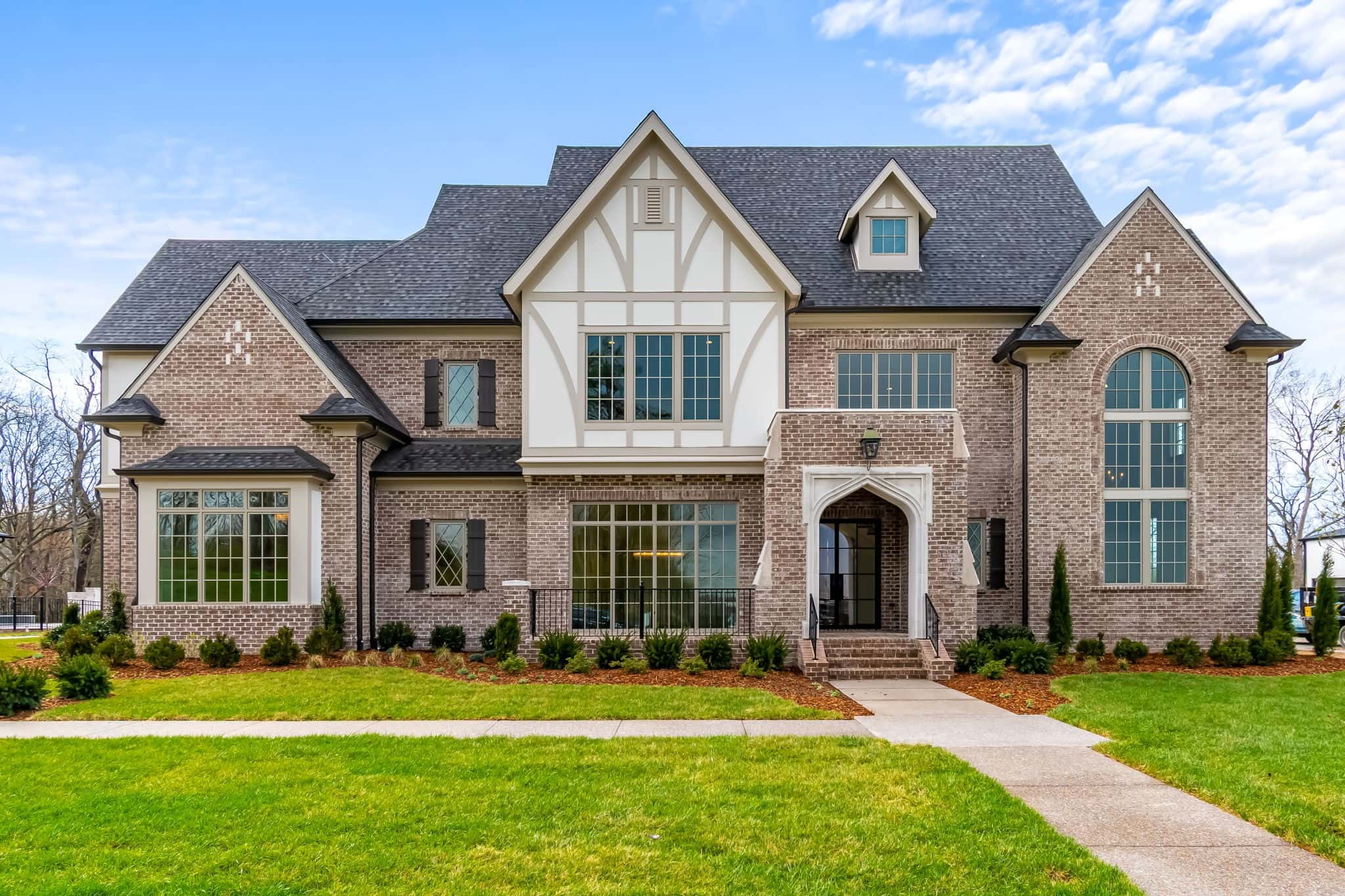
The character of Franklin inventory matters as much as the price: this is not a market of endless identical listings. At $1M+, homes differentiate sharply by lot, school zone, and finish level, and the best ones still move fast while overpriced ones sit.
What catches my $1M+ buyers off guard isn't the prices, since they've already read the headlines. It's how thin the truly turnkey layer is at any given moment. There may be plenty of listings on paper, but once you filter for the right school zone, the right lot, and finishes that don't need a renovation budget, the real shortlist is often a handful of homes. Those are the ones that go under contract while a buyer is still "thinking about it," and the dated or overpriced ones sitting at 90 days are what make the market look softer than it is.
If you already own in Franklin and are wondering what this market means for you, start with a professional home valuation rather than an algorithm's guess. Franklin's neighborhood-by-neighborhood variance is exactly where automated estimates break down.
Franklin Neighborhoods, Grouped by Lifestyle
Franklin's neighborhoods sort cleanly by lifestyle: new-urbanist community living (Westhaven), established family suburbs (McKay's Mill, Fieldstone Farms), historic walkability (downtown), and rural estate land (the west side toward Leiper's Fork). Picking the right group first makes the home search dramatically simpler.
Community-first, resort-style: Westhaven
Westhaven is Franklin's flagship Traditional Neighborhood Development on the west side of town: front porches, alley-loaded garages, a town center with restaurants and shops, golf, pools, and a packed social calendar. Median sale price sits around $1.33M with entry points in the upper $700s and custom homes past $5M. Price per square foot runs well above the Franklin average (roughly $473 vs. $394 citywide) . You're paying for lifestyle density, and residents will tell you it's worth it. Yes, there's an HOA, and it's an active one. Confirm current dues and what they cover directly with the Westhaven HOA before you budget.
Established family suburbs: McKay's Mill and Fieldstone Farms
McKay's Mill is a 1,700-plus-home planned community on Franklin's east side, built roughly 2000–2014, about two miles from I-65 and Cool Springs. It's the sweet spot for buyers who want amenities (pool, clubhouse, trails), strong schools, and a short hop to the office corridor at a median around $785K.
Fieldstone Farms, on the northwest side, is one of Franklin's largest and longest-established communities: 1990s-era homes, mature trees, and some of the most attainable single-family pricing in the city, with recent medians roughly in the mid-$500s to high-$600s and an average around $222 per square foot. For value-conscious buyers who still want a Franklin address and Franklin schools, it's often the first place I point.
Historic and walkable: downtown Franklin and the historic district
The blocks around Main Street, the historic district plus pockets like Battle Ground Park, Charlton Green, Henley, and Ralston Row, are Franklin's most character-rich addresses. Homes within genuine walking distance of Main Street typically trade from roughly $850K for smaller cottages to $2.5M+ for restored Victorian-era and larger new-build homes. Inventory here is chronically scarce; these homes are held long and sold quietly.
Rural estates: west Franklin toward Leiper's Fork
West of town, subdivisions give way to board fences, horse farms, and hills. Leiper's Fork is the crown jewel: an unincorporated village with a nationally known music-and-arts scene, where lots run 5 to 100+ acres, the median sale sits around $3.16M, and marquee estates trade from $10M to $30M+, often before they ever hit the open market. Most of this area carries no HOA; what it carries instead is scarcity.
How does Franklin compare to Brentwood? Brentwood, Franklin's neighbor to the north, offers larger minimum lot sizes and a shorter Nashville commute, but no walkable downtown: the classic trade is Brentwood's one-acre estate lots versus Franklin's Main Street culture and broader price range.
Downtown Franklin and Daily Life
Downtown Franklin is a working, living Main Street, a 16-block National Register historic district of restaurants, boutiques, the Franklin Theatre, and year-round festivals, and it is the single biggest reason people fall for this town. Daily life here doesn't require a trip to Nashville.
The festival calendar is the town's heartbeat. The Main Street Festival (spring), Pumpkinfest (fall), and Dickens of a Christmas (December) collectively draw more than 350,000 attendees a year , and Dickens alone attracted about 120,000 people in 2025; the 41st annual edition is set for December 12–13, 2026. Each September, the Pilgrimage Music & Cultural Festival takes over The Park at Harlinsdale Farm, a former horse farm turned city park just north of downtown.
If you want to understand why people stay in Franklin, time a scouting trip to one of these weekends. Festival days are when the town shows you what it actually is: not a backdrop for tourists, but locals filling their own Main Street. My standing advice to anyone weighing this move is simple: don't just tour houses here, spend a Saturday here. The town will make its own case better than any listing sheet can.
Dining has quietly become a draw in its own right: chef-driven kitchens and longtime local institutions share the same few blocks, and the Factory at Franklin, a restored 1929 stove factory, adds a second hub of restaurants, shops, and event space a short walk from Main Street. Between the farmers market, the Franklin Theatre's live calendar, and the parks along the Harpeth River, weekends fill themselves.
Commutes and Getting Around
Plan on 25–35 minutes to downtown Nashville off-peak and 45–60 minutes in rush hour; Cool Springs is a 10–15 minute drive from most Franklin neighborhoods; and BNA airport is about 23 miles, typically 25–40 minutes. Franklin is car-dependent outside the downtown core, so commute math should shape your neighborhood choice.
The real numbers, as of 2026:
- Downtown Nashville: About 20 miles up I-65. Off-peak, 25–35 minutes; weekday rush regularly runs 35–50 minutes in the morning and 40–55+ in the evening.
- Cool Springs: Inside Franklin's own city limits along I-65, so most Franklin neighborhoods reach it in roughly 10–15 minutes; McKay's Mill is only about two miles from the corridor. From the west-side neighborhoods the crosstown run is longer and peak traffic matters, so test the drive at your actual commute hour before you count on a number.
- Nashville International Airport (BNA): About 23 miles, typically 25–40 minutes via I-65 N to I-440/I-24, plus 15–20 minutes at rush hour.
Know the three roads that define Franklin traffic: I-65 is the spine (and the bottleneck: a wreck at rush hour changes your evening); Mack Hatcher Parkway (SR-397) is the loop around Franklin that lets you skip downtown congestion, with its western extension having dramatically improved west-side access; and Highway 96 is the east-west artery connecting Leiper's Fork, downtown, and I-65. West-side residents also use Hillsboro Road (Hwy 431) as a back way into Green Hills and Nashville.
Cost of Living and Taxes in Franklin
Franklin's overall cost of living runs roughly 40% above the national average, almost entirely because of housing, but its tax burden is genuinely low: Tennessee has no state income tax, and Franklin's combined effective property tax rate is around half a percent of market value, far below what most relocating buyers are used to.
The property tax math, as of the 2025 reappraisal cycle:
- Williamson County rate: $1.30 per $100 of assessed value (2025).
- City of Franklin rate: approximately $0.32 per $100 of assessed value under the FY26 budget (a base rate of roughly $0.2271 plus a $0.0929 infrastructure component).
- How it's calculated: Tennessee assesses residential property at 25% of appraised market value. So a $1.2M Franklin home is assessed at $300K, and at a combined rate of roughly $1.62 per $100, the annual bill lands near $4,860. Check the county's own tax calculator for current-year figures before budgeting.
- Effective rate: Ownwell puts Franklin's median effective property tax at about 0.54% of market value across all local levies.
For relocating buyers from Illinois, New Jersey, Texas, or California, that combination, no state income tax plus a sub-1% effective property tax, often offsets a meaningful chunk of the higher purchase price. For a fuller breakdown of taxes, utilities, insurance, and the practical costs of the move itself, see our guide to moving to Williamson County.
One caveat: homes in unincorporated Williamson County (much of the Leiper's Fork area) pay county tax only, while addresses inside Franklin city limits pay both. That difference is real money on a $3M estate, and it's worth mapping before you fall in love with a listing.
How Relocating Buyers Actually Move Here
The buyers who land well in Franklin follow the same sequence: nail down the school zone and commute first, rent or make a scouting trip if timing allows, then buy the neighborhood before the house. Skipping straight to "the prettiest listing" is how people end up on the wrong side of town for their daily life.
Here's the sequence I recommend after a decade of relocation work:
- Zone first. If schools drive your move, start with our Williamson County Schools guide and confirm current zoning for any address directly with the district: Franklin's growth means boundaries do get redrawn.
- Drive your commute at the real hour. A house that's 15 minutes from Cool Springs at noon can be 35 from downtown Nashville at 7:45 a.m. Test it before you offer.
- Pick your lifestyle group, then your neighborhood. Community amenities (Westhaven, McKay's Mill), value and maturity (Fieldstone Farms), walkable history (downtown), or acreage (west Franklin/Leiper's Fork).
- Get underwritten, not just pre-qualified. At Franklin's price points, listing agents scrutinize financing. Cash-strong and fully underwritten offers win ties.
- Compress the search into structured trips. Most of my out-of-state clients buy on their second visit when the first one is planned well.
A well-built touring day is more about sequence than volume. I'd rather show a handful of homes grouped by lifestyle area, one loop through the community neighborhoods, one through the west side, downtown on foot, than zigzag across town chasing fifteen listings, because after the eighth house nobody remembers the third one anyway. The homework happens the night before: rank the list, flag the dealbreakers, and be ready to drive the actual commute at the actual hour. Buyers who do that come home from the trip with a decision instead of a blur.
This is the part of the process where local representation earns its keep. I work these streets daily as a Williamson County luxury and estate specialist with Benchmark Realty, and I run my business, and my clients' negotiations, on relationships and results rather than volume quotas. If you're planning a move in the next 12 months, reach out and tell me your timeline; the earlier the conversation starts, the better your first scouting trip goes.