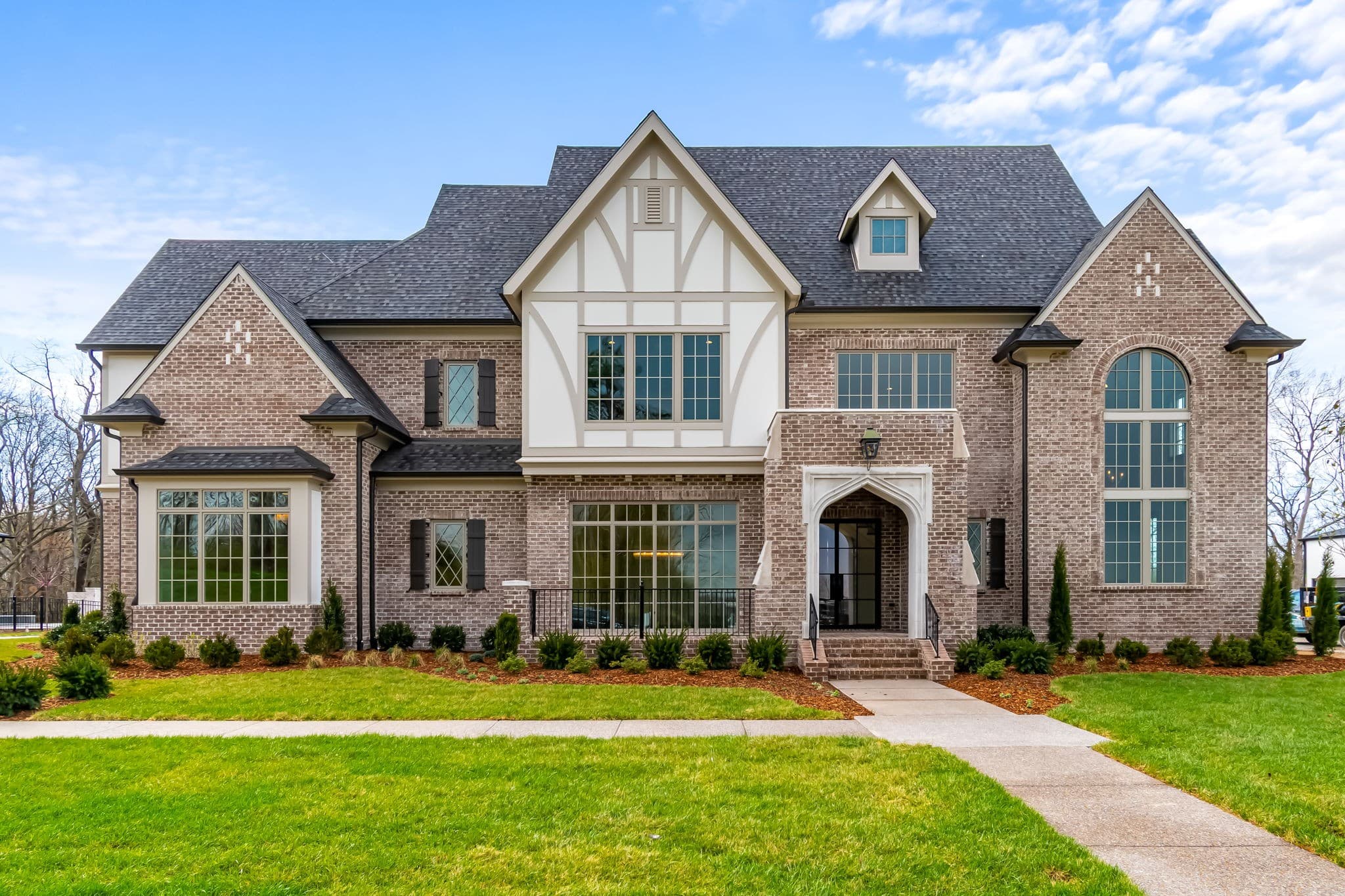
Most neighborhoods sell you a house. Westhaven sells you a town. That distinction (the community itself as the product, with the house almost secondary) is the single most useful frame for understanding why people pay what they pay to live here, and it's the frame this guide is built around. I'm Ryan Boggs with Benchmark Realty, and after 11+ years and 260+ closings across Williamson County, Westhaven is the community where I spend the most time untangling one specific confusion for buyers: what your HOA dues actually buy, what the Residents' Club includes, and what the golf club costs on top. We'll get to all of it.
The Westhaven Idea
Westhaven is a roughly 1,067-acre new-urbanist village on the west side of Franklin, developed by Southern Land Company, designed so that daily life (groceries, gym, pools, school, restaurants, concerts) happens inside the community rather than at the end of a drive.
The design language is Traditional Neighborhood Design: front porches pushed close to the sidewalk, garages hidden on rear alleys, tree-lined streets, pocket parks, and a central lake: a deliberate throwback to the pre-automobile American small town. That's not aesthetic trivia. It's the business model. When Southern Land Company planned Westhaven, the infrastructure (the Village Center, the Residents' Club, the trail network, the golf course, the elementary school site) came first, and the homes were built around it. You are not buying a house that happens to have amenities. You are buying a share of a functioning small town, and the house is your entry ticket.
That inversion explains almost everything else about Westhaven: why a 2,800-square-foot home here costs what a 4,000-square-foot home costs elsewhere in Franklin, why the HOA has real teeth on exterior aesthetics, and why resale demand stays deep even when the broader market cools. People aren't comparing Westhaven to other subdivisions. They're comparing it to not living in Westhaven.
The Amenity Economy: HOA, Residents' Club, and Golf Club
Here's the answer buyers always need first: your HOA dues include the Residents' Club and its amenities, but the Westhaven Golf Club is a separate private club with its own initiation fee and annual dues. Living in Westhaven does not make you a golf member.
Think of Westhaven as having three financial layers:
Layer 1: HOA dues (mandatory). Every owner pays association dues, and those dues fund the common-area infrastructure and access to the Residents' Club. Recent listings show monthly HOA figures varying by property and product type (roughly $200 to $280 a month on several resale listings, with some fee structures billed quarterly), but fees differ between single-family, townhome, and condo products, and they change over time. Do not budget off a listing's HOA line item alone: confirm the current dues schedule for the specific property with the Westhaven HOA before you write an offer, because attached products often carry additional maintenance fees on top of the master association dues.
Layer 2: the Residents' Club (included with dues). This is the amenity core your dues buy: a 15,000-square-foot clubhouse with a fitness center, an arts studio, a 37-seat theater, and the pool complex, including a lap pool, slide pool, and zero-entry pool, anchored by a 119-foot water slide. Beyond the club building, the community maintains roughly nine miles of trails, about 20 parks, plus tennis and pickleball courts. For most households, this layer is the one that gets used daily, and it comes with the address.
Layer 3: Westhaven Golf Club (separate, optional). The 18-hole Arthur Hills-designed private course and its clubhouse, practice facility, and dining operate as a membership club, not an HOA amenity. Third-party golf-industry sources place initiation in the $25,000 to $50,000 band and annual dues in the $5,000 to $10,000 band, and the club offers multiple membership categories including golf, dining, and national memberships for non-locals. The club does not broadly publish current pricing, and categories and waitlists change. Treat those bands as orientation only and confirm current numbers directly with the club's membership office.
The Homes: Cottages to Customs
Westhaven's housing runs a wide band: attached townhomes and cottages from the mid-$500Ks, a deep core of single-family homes trading around $1M to $1.4M, and custom and golf-adjacent estates pushing past $2.2M.
The spread is the point. New-urbanist planning deliberately mixes product types on the same streets, so Westhaven offers more distinct rungs on the ladder than almost any Franklin neighborhood:
- Townhomes and cottages. Attached and small-lot detached product starts around the $550K mark: the most attainable entry into the community, popular with downsizers who want the amenity life without the yard, and with buyers getting into the neighborhood to move up later.
- Core single-family. The bulk of the neighborhood: porch-fronted homes on alley-loaded lots. Recent rolling-12-month street-level medians cluster in the low-to-mid $1M range: roughly $1.065M on Westhaven Boulevard, $1.175M on Addison Avenue, and $1.375M on Calico Street among resales.
- Customs and club-adjacent estates. Larger homes near the golf course and in the newer sections, including work by custom builders, reaching past $2.2M at the top of the recent recorded range.
- Active adult. Westhaven also includes a dedicated active-adult section with its own Astor Club amenity, a newer wrinkle worth knowing about for 55+ buyers who want the village without the family-sized house.
One pricing reality to internalize: on a price-per-square-foot basis, Westhaven trades at a meaningful premium to most of Franklin. You are paying for Layer 2 and the option on Layer 3 (the amenity economy) embedded in every square foot. If you want a current read on what a specific Westhaven property is worth, or what your own home would need to sell for to fund the move, start with a professional valuation.
New Construction and the Western Expansion
Yes, Westhaven is still actively building. Southern Land Company's homebuilding arm remains the dominant builder in the newer western sections, with new construction concentrated along corridors like Townsend Boulevard, where recent new builds have listed roughly from $1.03M to $1.335M.
City of Franklin permit activity through early 2026 shows SLC Homebuilding LLC (Southern Land Company) pulling residential permits across multiple active sections, including Sections 63 and 67 on the community's newer edge, alongside builders such as Legend Homes and Mike Ford Custom Builders. Section numbers in the 60s tell you how far the village has grown from its original core near the Village Center; the newest streets sit on the community's western and outer edges.
The build-vs-resale decision in Westhaven has its own logic:
- New construction gets you current finishes, builder warranties, and the newest sections, but those sections are farthest from the Village Center and Residents' Club, and the streetscape (trees, especially) takes years to mature into the postcard look that sold you on the neighborhood.
- Resale in the original sections gets you mature trees, walkability to Front Street and the club, and the fully realized version of the Westhaven idea, at street-level medians that, on established streets, can exceed comparable new-build pricing precisely because of that location within the village. Resale demand runs hot: some streets have seen homes go under contract in days with no discount from asking.
New-construction inventory, pricing, and lot releases change monthly; Southern Land's own sales operation controls most of it, which is exactly the situation where having your own representation walking in the door matters.
A Week in Westhaven
Daily life in Westhaven is the product, and a typical week actually uses it: gym and pools at the Residents' Club, errands and dinner at the Village Center, trail miles without leaving the neighborhood, and a social calendar dense enough that the problem is choosing.
The Village Center is the hub: residents walk or golf-cart to Front Street for coffee, coal-fired pizza, a craft beer at the pub, plus everyday needs like groceries, medical offices, and personal services, all inside the community. The Residents' Club carries the fitness and pool routine; the nine miles of trails and 20 parks carry the dogs, strollers, and runners.
Then there's the calendar. Westhaven's signature event is Porchfest, the annual festival that has featured dozens of local musicians performing across more than a dozen resident porches, capped by an evening concert on the lake. Around it runs a year-round rhythm of singer-songwriter nights, summer concerts, holiday events, and club programming. This is the part no spreadsheet captures: Westhaven is structurally social. For extroverted households it's the best feature in Williamson County. For households who prize privacy and anonymity, it's worth being honest with yourself before you buy. Which brings us to the trade-offs.
The Trade-Offs
Westhaven's honest downsides are a real price premium over the rest of Franklin, a west-side location that puts the interstate and Cool Springs on the far side of town, and an HOA that governs your exterior choices with genuine authority.
The premium. You will generally pay more per square foot in Westhaven than for comparable square footage elsewhere in Franklin, because the amenity economy is capitalized into every home. Comparative market data shows Westhaven's median trading well above other Franklin master-planned communities. For example, recent analysis put Westhaven's median around $1.33M versus roughly $950K in Berry Farms. If the amenities and social fabric aren't things you'll actually use, you're paying for someone else's lifestyle.
The geography. Westhaven sits along New Highway 96 on Franklin's west side, less than three miles from downtown Franklin, a genuine strength. But I-65, Cool Springs, and the east-side employment corridor are across town; Cool Springs runs roughly 15 minutes in normal conditions and more at peak, and Nashville commuters should drive their actual route at their actual hour before committing. Hwy 96 is the main artery in and out, and it carries the load of a growing west side.
The governance. The front porches match because the design code makes them match. Exterior paint, landscaping, fences, and modifications run through architectural review. Most residents consider this the mechanism that protects their value (it is), but if you chafe at asking permission to change your shutters, Westhaven's deal is not your deal.
Westhaven vs Franklin's Other Master-Planned Communities
The short version: McKay's Mill and Fieldstone Farms deliver strong amenity packages at meaningfully lower price points, while Westhaven delivers a categorically different product (a walkable village with commercial core and private golf) at a categorically different price.
McKay's Mill (east side, near Cool Springs) offers a clubhouse, pool, and trail network with a far shorter hop to I-65 and the Cool Springs job corridor. It's the pragmatic amenity-community choice: you trade Westhaven's village fabric and social density for hundreds of thousands of dollars of price relief and a better east-side commute.
Fieldstone Farms (northwest Franklin) is the established value play: one of Franklin's largest communities, with pools, courts, and green space at some of the most accessible price points among Franklin's amenity neighborhoods. It shares Westhaven's west-of-town geography without Westhaven's premium, or its Village Center, golf club, and new-urbanist streetscape.
The honest test: if you'd use the Village Center weekly, value the social calendar, and can carry the premium without strain, nothing else in Franklin substitutes for Westhaven. If you mainly want a pool, a clubhouse, and a good address, the other two deserve a serious look first.
Thinking about Westhaven, or deciding between it and another Franklin community? Reach out and I'll walk you through current inventory, the real monthly carry costs, and whether the village lifestyle fits how your household actually lives.