Nolensville's Historic Core
Nolensville is the rare Williamson County town that grew around something real: a working 19th-century village core on Nolensville Road that still anchors the town's identity today. Established in 1797 by Revolutionary War veteran William Nolen, first incorporated in 1839, and re-incorporated by a vote of residents in 1996, Nolensville has always been a town first and a suburb second.
That distinction matters more than it sounds. Brentwood and Franklin grew outward from commercial corridors and courthouse squares; most newer Nashville-area suburbs grew out of nothing but farmland and a rezoning. Nolensville's historic district, running along both sides of Nolensville Road roughly from Oldham Drive south to York/Williams Road, is lined with 19th-century structures still in daily use as homes, shops, and restaurants. The town's Historical Society, formed in 2001 and chartered in 2003, actively works to preserve those sites, which is one reason the core hasn't been bulldozed for strip retail the way so many small-town main streets have.
The re-incorporation story tells you a lot about the town's character. Nolensville lost its original charter in the 1800s and spent more than a century as an unincorporated crossroads community. As Nashville's growth pushed south in the 1990s, residents voted in August 1996 to re-incorporate, largely to control their own zoning and destiny rather than be absorbed by neighbors, and held their first town election that October. Thirty years later, that decision looks prescient: Nolensville has been ranked the fastest-growing city in Tennessee and among the top ten fastest-growing in the nation, with population up roughly 163% from 2010 to 2023. The 2020 census counted 13,829 residents; 2026 estimates put the town at about 16,214.
What you feel driving through the core today: the Nolensville Feed Mill with its Amish-made goods, Martin's Bar-B-Que Joint (the original location, opened here in 2006 before the brand went regional), antique shops in old storefronts, and Mill Creek running behind it all. It's a five-minute stretch of road that gives 16,000 people a shared center of gravity, and it's the main reason Nolensville buyers say "town," not "subdivision," when they describe where they live.
Why Families Pick Nolensville
Families pick Nolensville because it delivers the things families actually use: ballfields, walkable schools, a rec center, and a genuine town festival calendar, all at a price point below Brentwood and most of Franklin. The community infrastructure here is unusually dense for a town this size.
Start with baseball, because in Nolensville it's practically civic religion. Nolensville Park at 2310 Rocky Fork Road spans 37.5 acres with four youth baseball fields, a youth football field, a playground, a dog park, and a walking trail. Those fields are home to Nolensville Little League, which has won the Little League Southeast Region championship five times, in 2013, 2014, 2021, 2022, and 2023, earning trips to the Little League World Series in Williamsport. When the town's 11- and 12-year-olds are on ESPN, the whole town watches. That's not a marketing line; it's a Saturday in August here.
The event calendar centers on the Historic Nolensville Buttercup Festival, held each May in the historic district along Mill Creek. The festival, now more than 20 years running, with the 2026 edition held Saturday, May 2, brings four stages of live music, more than 100 artisan vendors, food trucks, and the Little Miss Buttercup pageant to Nolensville Road.
Daily life is stitched together by the town's trail network, which links neighborhoods to the public library, post office, Nolensville Recreation Center, schools, and the ballfields. Several central subdivisions can reach all of them without a car, which is genuinely rare in Williamson County. A new park on Sunset Road, with pickleball courts and additional green space, is under development. Add Mill Creek Brewing Co. (founded 2014, family- and dog-friendly taproom with Thursday trivia and Friday live music) and the Village Green center anchored by Publix, and you get a town where the weekend doesn't require leaving.
When I tour relocating families through Brentwood, Franklin, and Nolensville on the same trip, Nolensville is often the town they didn't expect to fall for. The pattern repeats: the spreadsheet says Franklin, then we drive past the ballfields on a Saturday or walk the Feed Mill stretch, and the conversation changes. My advice is to visit on a weekend, not a weekday. This is a town you evaluate by how it lives, not how it photographs.
Neighborhoods by Price Tier
Nolensville housing runs in three broad tiers: established communities from the mid-$400s to about $800K, a newer mid-luxury band from roughly $900K to $1.2M, and a custom/luxury tier from $1.1M to $2M+. Almost everything here was built after 2000, so the tiers track more with lot size, finish level, and vintage than with age or condition.
Established tier (roughly $445K–$800K):
- Bent Creek is Nolensville's largest and most varied community, with single-family homes, townhomes, and 55+ cottages ranging from about $445K to $1.19M. That means it spans into the upper tiers too, but its entry points are the most attainable in town.
- Ballenger Farms is a smaller, tightly held neighborhood prized for its walkability to schools; turnover is low, with recent sales in the $605K–$650K range.
- Winterset Woods, off Sunset Road, is the town's signature all-brick community (built roughly 2005–2014). Over the past 12 months, homes sold between $680K and $1M with a median of $750K; HOA dues run about $85/month and cover a pool with splashpad and playground. Kids can walk to Sunset Elementary via sidewalks, one of the few Williamson County subdivisions where that's realistic.
Mid-luxury tier (roughly $900K–$1.2M):
- Summerlyn, built primarily by The Jones Company, currently shows listings from $980K to about $1.23M at an average of roughly $314 per square foot, with a community pool and cabana; HOA dues run about $224/quarter.
- Telfair is a small neighborhood of roughly 150 homes averaging about 3,500 square feet and priced around $1.1M.
- Scales Farmstead, one of the town's most popular newer communities, has around 320 homes, also averaging about 3,500 square feet, with prices typically in the $1M–$1.1M range.
Most Nolensville subdivisions carry an HOA, typically modest ($75–$100/month is common where there's a pool), so budget for dues but don't expect Brentwood-scale amenity fees. If you're weighing what your current home would net toward a move into one of these tiers, start with a professional home valuation.
The Luxury and New-Construction Tier
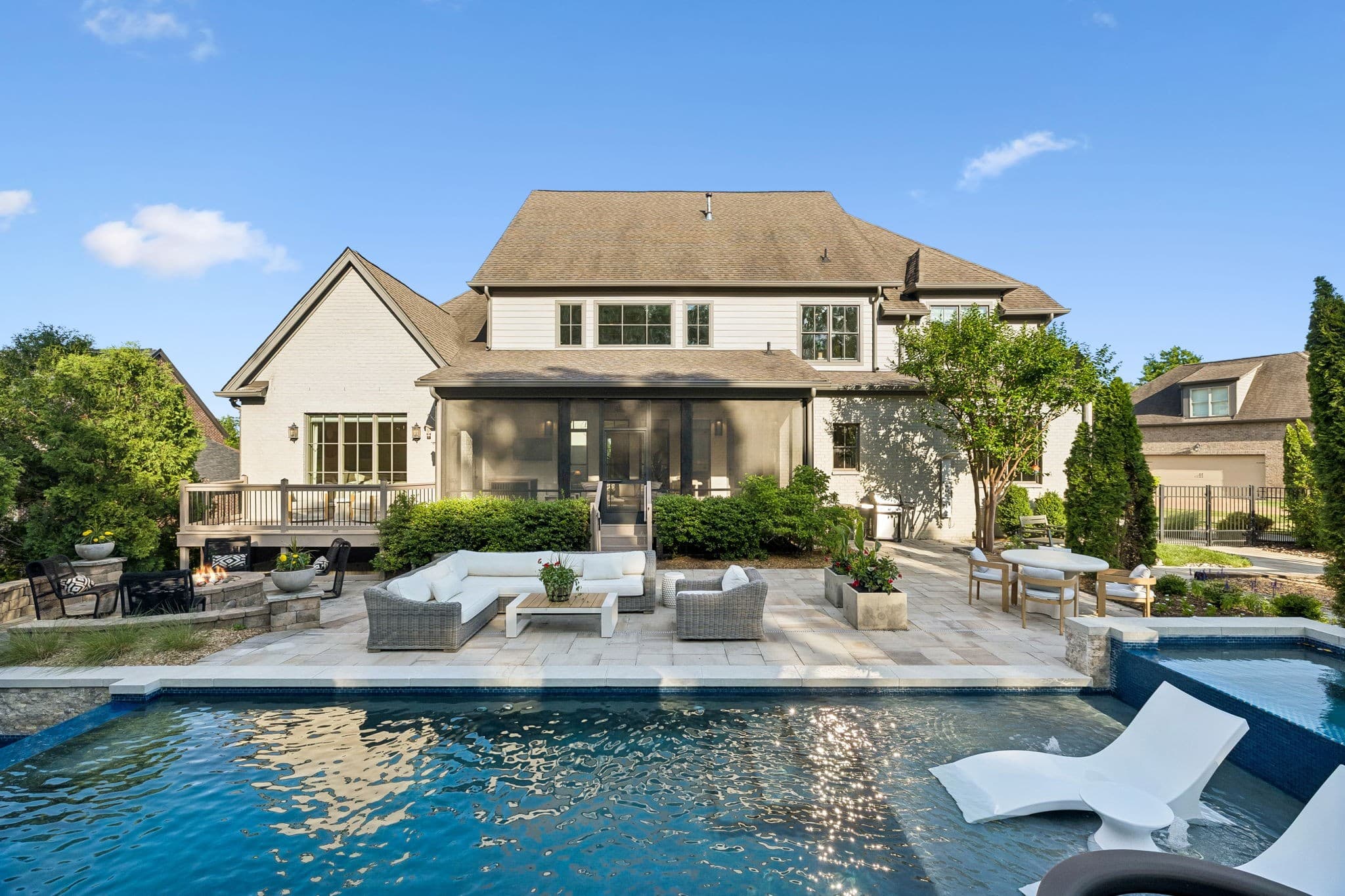
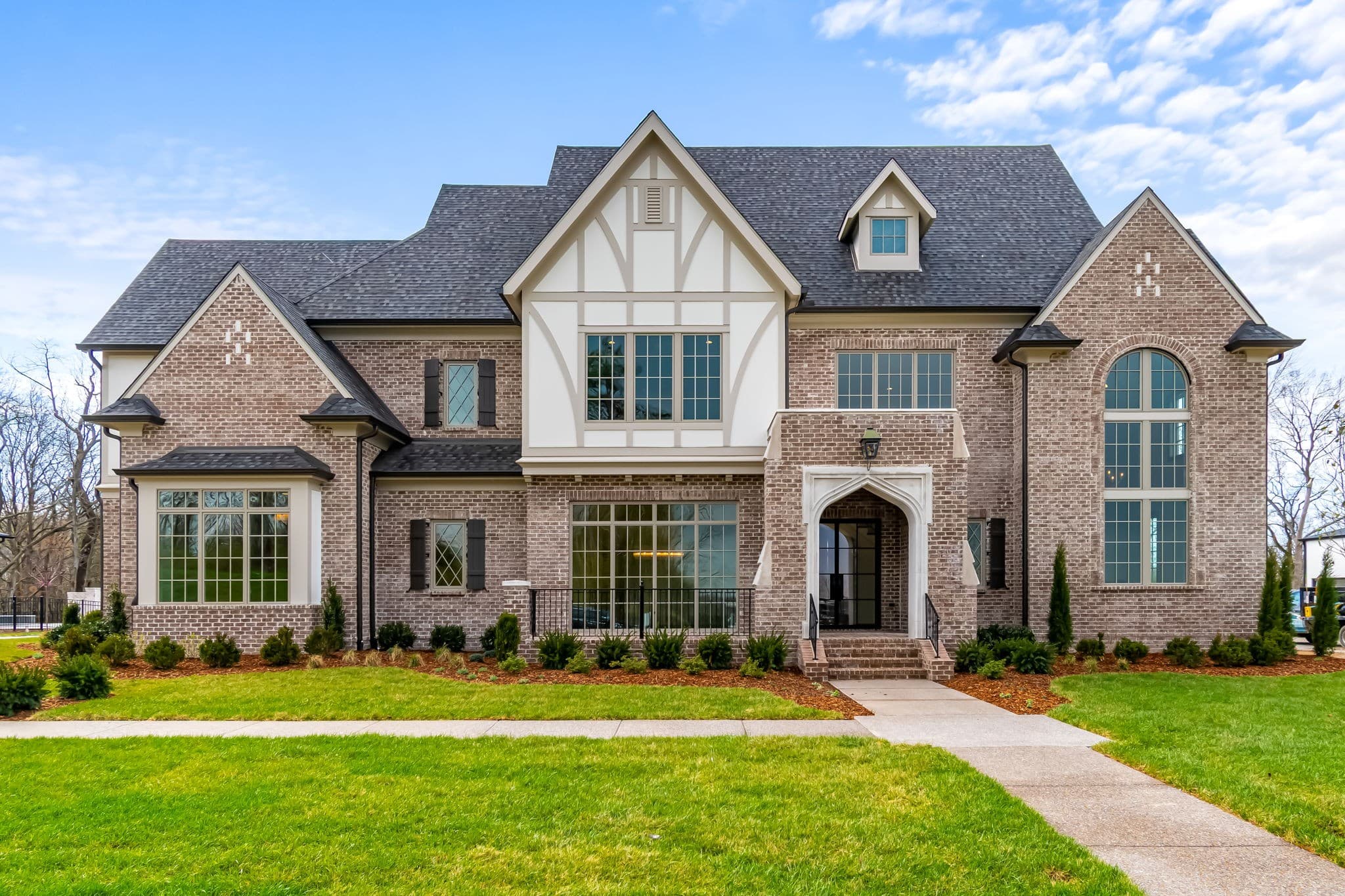
Nolensville's top end runs from established custom communities in the $1.1M–$1.7M range to active new construction reaching $2.9M+, and unlike much of Williamson County, builders are still actively delivering homes here in 2026. As of spring 2026, new construction in Nolensville spans roughly $329K (townhomes) to over $2.9M across about ten communities.
- Benington, along Sunset Road, is the town's most established luxury address: roughly 194 custom homes across ten sections dating to 2006, with recent pricing from about $1.1M to $1.7M (about $332 per square foot on average). Half-acre lots back to wooded common areas, and the pool and trail system get real daily use. Its west-side location also gives it some of the fastest I-65 access in town via Concord Road.
- The Enclave at Dove Lake is the marquee active development: 130 homesites on 215 rolling acres, built by three semi-custom builders, Drees Homes, Dalamar Homes, and David Weekley Homes. David Weekley's Arrington Collection there lists homes starting around $880,900, with quick move-in inventory and ready-to-build plans still available in 2026.
- Annecy and other newer communities round out the range, running from townhomes in the low $400s up to custom builds over $1.5M. Phase availability and pricing in active communities move quickly, so confirm current offerings with the builder before you plan around a number.
For $1M–$2M buyers comparing Nolensville against Franklin and Brentwood, the honest pitch is this: you'll get newer construction, more house per dollar, and often a more usable lot, traded against interstate access and old-money cachet.
A word of caution before you walk into any design center: the base price and the price of the home people actually build are two different numbers, and the gap gets set by decisions made in a single afternoon. I walk buyers through the structural options first, since those can't be changed later, and treat finishes as line items to weigh one at a time, not a package to accept. And however welcoming the builder's sales office feels, remember that agent works for the builder; bring your own representation from the very first visit, because that's when the terms get shaped.
The Northeast-Corner Advantage
Nolensville sits in the northeast corner of Williamson County, and that gives it a fundamentally different access pattern from every I-65 town: it's oriented toward Nolensville Pike, Old Hickory Boulevard, and the I-24 side of Nashville, which puts BNA airport and southeast Nashville closer than they are from Franklin or Spring Hill.
Here's the quirk in practice. Nolensville has no direct interstate access, which sounds like a negative until you look at where the roads actually go:
- BNA / Nashville International Airport: roughly 25–35 minutes, running north and east without ever touching I-65. Frequent flyers who'd face 35–45+ minutes from Franklin routinely beat that from Nolensville.
- Downtown Nashville: about 30–45 minutes depending on route and hour, north on Nolensville Pike (SR-41A) to I-440/I-24, via Edmondson Pike, or west on Concord Road to I-65. Peak windows (7–9 AM, 4–6:30 PM) add 10–20 minutes.
- Cool Springs / Brentwood: about 20–30 minutes via Concord Road or Sunset Road to I-65. Central Nolensville addresses can do Cool Springs in roughly 18 minutes off-peak.
- South Nashville / Berry Hill: about 25–35 minutes straight up Nolensville Pike, a corridor Franklin commuters essentially can't use.
The trade-off is real: commutes here are surface-road commutes, so you're managing steady congestion at pinch points (Nolensville Pike near Old Hickory Boulevard is the classic one) rather than cruising an interstate. But for households where one spouse flies weekly, works at the airport-corridor employers, or commutes to southeast Nashville, Murfreesboro Road, or the I-24 corridor, Nolensville is geographically the best-positioned town in Williamson County, full stop.
The airport math is the part of my Nolensville tours that draws the biggest double-take. Buyers assume a Williamson County address means a long haul to BNA, so I'll have them pull up the live drive time right there in the car: northeast on surface roads, never touching I-65, and it comes back shorter than the Franklin route they'd been picturing. For households with a weekly flyer, that single comparison can reframe the entire search.
Market Data and Trajectory
Nolensville's market in 2026 is characterized by a $735K–$790K median, rising average prices at the top end, and, for the first time in years, real inventory that gives buyers leverage. It remains one of the most in-demand small towns in Middle Tennessee, but the frenzy years are over.
The recent numbers, from RealTracs MLS-based reporting:
- January 2026: 19 closings at a median sale price of $735,000, down a modest 3.7% from January 2025's $763,500, with closings down 32% year over year, reflecting slower velocity rather than falling values.
- February 2026: average single-family sale price of $900,596, up 9.7% from $820,774 a year earlier, driven by a surge in the $750K–$1M bracket. Days on market stretched to 42, up from 25 in February 2025.
- Inventory: roughly seven months of supply as of 2026 reporting, buyer's-market territory by the traditional definition, and a meaningful shift for a town that spent most of the 2020s under two months.
The longer trajectory is what makes Nolensville distinctive. A town of a few thousand people in 2010 now holds about 16,214 residents, growth of more than 15% just since the 2020 census. Nearly all of the housing stock is post-2000, the school infrastructure was built alongside the rooftops (a new high school in 2016, new elementary and middle schools through the 2010s), and remaining developable land is finite. The practical read for buyers: today's elevated inventory is a window, not a new normal. For sellers: pricing discipline matters again, homes that sat at 25 days now sit at 42, and the difference between a clean sale and a stale listing is set in the first two weeks.
Nolensville vs Brentwood and Franklin
Choose Nolensville for small-town identity, newer homes, and the best airport/southeast-Nashville access in the county; choose Brentwood for I-65 access, acre-plus estate lots, and top-of-market prestige; choose Franklin for historic downtown depth, employment proximity, and the widest range of housing. All three share Williamson County schools and taxes; the differences are lifestyle and geometry.
The honest breakdown:
- Price for equivalent house: Nolensville is the value play. A 3,500-square-foot newer home runs roughly $1M–$1.2M in Scales Farmstead or Telfair; a comparable Brentwood home is typically well north of that, and Brentwood's one-acre minimum lot standard in most of the city pushes entry prices dramatically higher.
- Commute pattern: Brentwood and Franklin own the I-65 corridor and Cool Springs. Nolensville owns BNA, I-24, and southeast Nashville. Decide where you actually drive, not which town sounds better.
- Housing stock: Nolensville is almost entirely post-2000 construction, great for buyers who want new systems and open plans, limiting for buyers who want acreage, mature trees, or historic homes. For land and long views one town over, look at neighboring Arrington, Nolensville's rural southeastern neighbor, where estate lots and horse properties pick up right where Nolensville's subdivisions end.
- Town feel: This is Nolensville's trump card. Brentwood famously has no downtown; Franklin's is magnificent but shared with millions of visitors a year. Nolensville's historic core is small, but it's genuinely local: the Feed Mill, Martin's, the Buttercup Festival, Little League Saturdays.
After 11+ years and 260+ closings across Williamson County, Ryan Boggs's short version: buyers who tour Brentwood, Franklin, and Nolensville back-to-back almost always self-sort within a day, and the ones who pick Nolensville pick it for reasons no spreadsheet captures. If you want help pressure-testing the fit for your own situation, reach out here.